How to Move a Fridge Safely
Moving a fridge is not quite as simple as moving a chair or a small piece of furniture. Fridges are heavy, awkward to handle and can be easily damaged if they are moved or transported incorrectly. There is also the risk of damaging your floor, walls or even the fridge itself.
Whether you are moving house, replacing an old appliance or simply need to move your fridge to another room, a little preparation can make the whole process much easier.
If you are wondering how to move a fridge, the most important things to remember are to empty it, prepare it properly, protect it during the move and keep it as upright as possible.
Kitchen Fitting: What to Expect and How to Prepare

How to prepare a fridge before moving
Before you start moving a refrigerator, take everything out of the fridge and freezer. Food, bottles and containers can make it much heavier, and loose items can move around and break during transport.
Once it is empty, remove any detachable shelves, drawers and trays. Clean up any spills and dry the inside properly. This is also a good opportunity to give the fridge a quick clean before it arrives at its new home.
Unplug the fridge and make sure the cable is safely secured so that it does not get caught while the appliance is being moved.
If your fridge has an ice maker or water dispenser connected to a water supply, disconnect the water line carefully and make sure there is no remaining water that could leak during the move.
When you prepare a fridge for moving, it is also worth checking the manufacturer's instructions. Some models have specific requirements, particularly when it comes to transporting them.
When should you defrost a fridge?
If your fridge has a freezer compartment with built-up ice, it should be defrosted before moving. Ideally, give yourself enough time for all the ice to melt completely.
Depending on how much ice has built up, this can take several hours. Place towels around the appliance to absorb any water and make sure the inside is completely dry before it is moved.
Modern frost-free freezers may not need manual defrosting, but it is still worth checking the manufacturer's instructions before moving the appliance.
Defrosting is especially important because water can leak during the move and damage the floor, packaging or other belongings.

How to protect shelves and drawers
Glass shelves and plastic drawers can easily crack or break when a fridge is being moved. Even if they seem securely fitted inside the appliance, it is safer to remove them.
Wrap glass shelves individually in blankets, bubble wrap or other suitable protective material. Drawers can also be wrapped to prevent scratches and damage.
Do not place heavy objects on top of shelves or drawers during transport. Keep them together in a safe box where they will not move around.
If some parts cannot be removed, use suitable tape to keep them from moving. Avoid putting tape directly on surfaces that could be damaged by adhesive.
How to move a fridge without damaging the floor
A full-size fridge can be surprisingly heavy, so dragging it across the floor is not a good idea. It can leave scratches, marks or dents, particularly on wooden, laminate or vinyl flooring.
Use a suitable appliance trolley or moving dolly whenever possible. Having at least two people handle the fridge can also make the process safer and easier.
Before moving it, clear the route and remove anything that could get in the way. Measure doorways and narrow spaces beforehand so that you know the fridge will actually fit through.
For extra protection, place a moving blanket, cardboard or another suitable protective layer over vulnerable flooring.
Take your time when moving around corners, door frames and stairs. Trying to rush can result in damage to both the appliance and your home.
Should a fridge be transported upright?
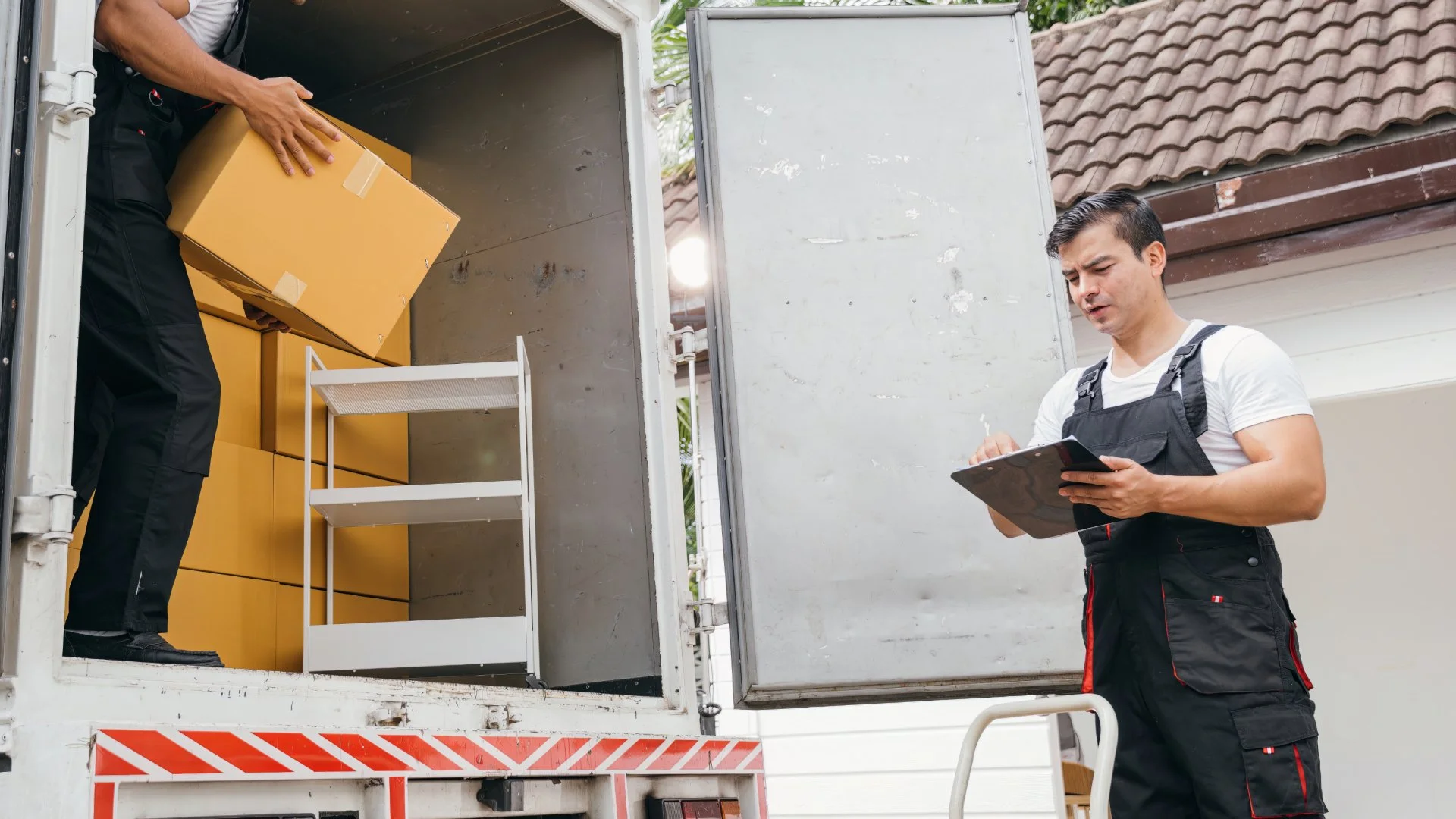
Whenever possible, a fridge should be transported upright. This is generally the safest position and helps prevent issues with the compressor and its oil.
Keeping the fridge upright is particularly important for longer journeys. Use a suitable vehicle and make sure the appliance has enough space to remain stable throughout the journey.
If you are using professional movers, let them know that you are transporting a fridge so they can use the right equipment and loading method.
How to secure a fridge during transport
Knowing how to transport a fridge safely is just as important as preparing it.
Once the fridge is inside the vehicle, it should be secured so that it cannot slide, tip over or move during the journey. Use suitable straps to hold it firmly in place, but do not tighten them so much that they damage the appliance.
Keep the fridge away from other heavy items that could fall against it. Moving blankets can help protect the doors and exterior from scratches and dents.
If possible, keep the fridge upright and make sure there is enough support around it to prevent movement when the vehicle turns, stops or starts.
How long should you wait before switching it back on?
After moving a fridge, it is usually best to leave it standing upright for a while before plugging it back in. This gives any oil that may have moved inside the compressor time to settle.
The exact waiting time depends on the fridge and how it was transported, so checking the manufacturer's instructions is always the safest option.
If the fridge remained upright throughout the move, the required waiting time may be shorter. If it was tilted significantly or transported on its side, you may need to wait longer.

Can you lay a fridge down when moving it?
Ideally, no. Keeping a fridge upright is the safest option, but sometimes the size of the appliance or the vehicle makes this difficult.
If you absolutely have to lay the fridge down, check the manufacturer's instructions first. Different fridge models can have different requirements, and some should never be transported horizontally.
If it has been transported on its side, do not immediately plug it in when you arrive. Leave it standing upright for the recommended amount of time before switching it on.
How long should a fridge be unplugged before moving?
The fridge should be unplugged before you start moving it, and it should be completely empty and dry. If it needs to be defrosted, allow enough time for all the ice to melt before moving it.
There is no single waiting period that applies to every fridge. The important thing is to give yourself enough time to prepare the appliance properly rather than trying to move it while it is still running or full of food.
If you are unsure, check the manufacturer's instructions for your specific model.
Can you turn a fridge on straight after moving it?
It is better not to turn a fridge on straight after moving it.
The amount of time you should wait depends mainly on how the fridge was transported. If it stayed upright, you may not need to wait as long. If it was laid down or tilted for a significant amount of time, it is generally safer to leave it upright for longer before switching it on.
Always check the manufacturer's instructions if you have them, as they are the best source for your particular model.
Moving a fridge safely is mostly about preparation. Empty it, defrost it when necessary, protect the removable parts, avoid dragging it across the floor and keep it upright during transport whenever possible. If the appliance is particularly large, the route is difficult or you simply do not want to risk damaging it, getting professional help can make the move much easier.