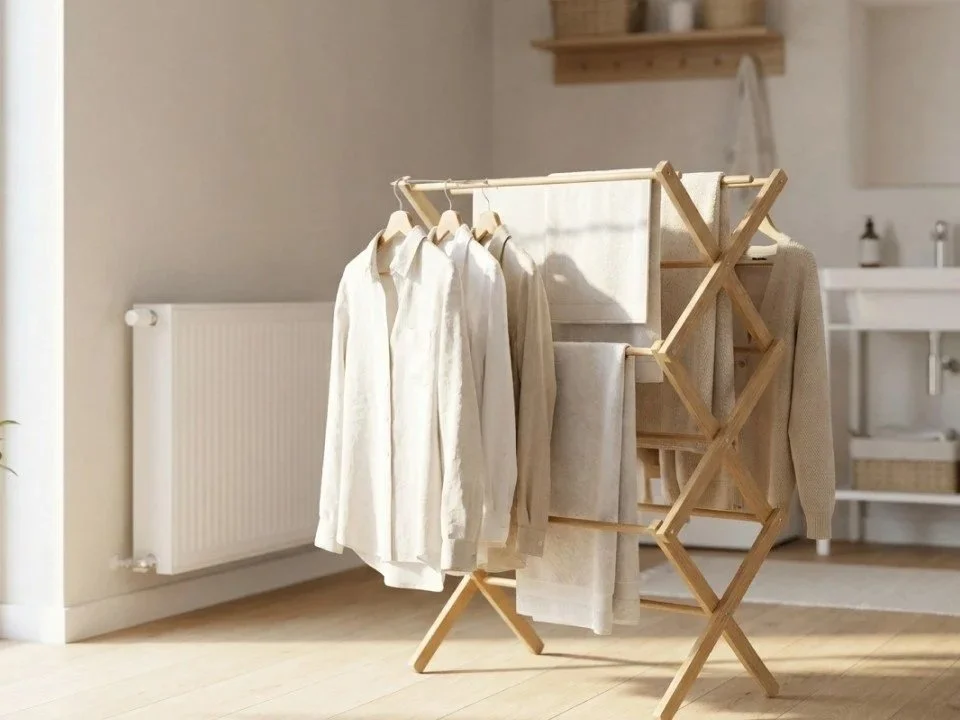
How to Dry Clothes Indoors in Winter
When the temperature drops and the weather turns wet, getting your laundry dry can quickly become a challenge. Hanging clothes outside is not always an option, and running a tumble dryer after every wash can make your energy bills creep up.
The good news is that you do not need a tumble dryer to get your clothes dry, even during the coldest months. With a few simple changes to your laundry routine, you can make drying clothes indoors in winter much easier, reduce drying time and keep your home feeling fresh.
Whether you live in a small flat or a house with plenty of space, here is how to dry clothes indoors without creating unnecessary moisture or leaving everything smelling damp.

Preparing Laundry Before Hanging It
Getting your clothes ready before they go on the airer can make a surprisingly big difference to how quickly they dry.
Start by choosing the right washing machine spin cycle. A higher spin speed removes more water from your clothes, which means less moisture needs to evaporate once they are indoors. However, always check the care labels, as delicate fabrics may need a gentler setting.
If your washing machine has a separate spin programme, you can use it for suitable items that still feel particularly wet after washing.
It is also worth shaking each item before hanging it up. This helps separate the fabric, reduces creases and allows air to circulate more freely.
Try to avoid leaving wet laundry sitting in the washing machine for too long. Clothes that remain damp in a closed drum can quickly develop an unpleasant smell, especially when the weather is cold and drying takes longer.

Where to Position Your Clothes Airer
Where you place your clothes airer can have a big impact on drying time. The aim is to find a spot with enough airflow, a little warmth and room for moisture to escape.
A spare room, utility room or well-ventilated area is often a good choice. If you have a room that gets some natural light during the day, placing your airer nearby can also help, although sunlight is not essential for drying clothes.
Avoid placing your airer directly against a wall or squeezing it into a narrow corner. Air needs to move around your clothes, so leaving some space on all sides can help them dry more evenly.
If you are using a heated airer, follow the manufacturer's instructions about where it can be positioned and whether it needs a cover.
Try to keep wet laundry away from furniture, curtains and other fabrics. If the room is small, you may need to move the airer occasionally to make sure everything has enough space.
How to Space Clothes for Better Airflow
It can be tempting to fit an entire load of laundry onto one airer, especially when you want to get everything out of the way. However, overcrowding is one of the main reasons clothes take so long to dry indoors.
Leave a gap between each item so that air can move around the fabric. Thick jumpers, jeans and towels need more room than lightweight T-shirts or underwear.
Here are a few simple ways to make the most of your airer:
Hang larger items at the edges: This helps prevent them from blocking airflow to smaller clothes.
Fold thick items over fewer bars: Avoid doubling them up more than necessary, as the folded sections can stay damp for hours.
Turn clothes occasionally: If one side is drying more slowly, turning the item can help.
Use hangers for shirts and dresses: Hanging them individually can create more space and help them keep their shape.
If your airer is completely full, consider drying your laundry in two smaller batches rather than trying to fit everything together. It may seem slower at first, but better airflow can help the clothes dry more efficiently.
Managing Moisture While Clothes Dry
When clothes dry, the water they contain evaporates into the surrounding air. During winter, this can make your indoor humidity rise, particularly if you are drying laundry in a small room with the windows closed.
Managing this moisture is important for keeping your home comfortable and reducing the risk of condensation.
Ventilation
Good ventilation helps moisture escape rather than allowing it to build up inside your home.
If possible, open a window slightly in the room where your clothes are drying, or use an extractor fan if the room has one. Even a short period of ventilation can help replace humid indoor air with drier outdoor air, depending on the weather conditions.
You do not need to leave every window open all day. Instead, try airing the room regularly, especially after several hours of drying or when the windows begin to look misty.
Keep internal doors closed if you are drying clothes in one particular room. This can help prevent moisture from spreading throughout the house.
Using a Dehumidifier
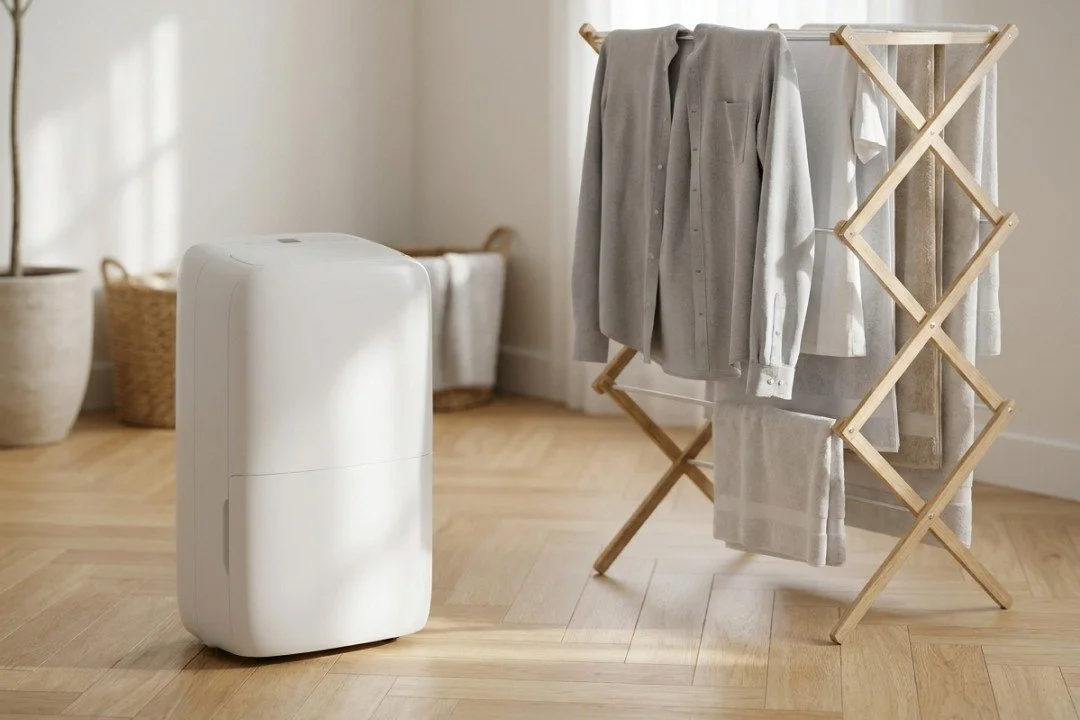
A dehumidifier can be particularly useful when drying clothes indoors in winter. It removes moisture from the air, helping create conditions where water evaporates from your laundry more easily.
For the best results, place the dehumidifier in the same room as your clothes airer, following the manufacturer's instructions. Keeping the room reasonably enclosed can help it work more efficiently, although you should still follow any ventilation guidance for your home and appliance.
Some dehumidifiers have a dedicated laundry mode, which is designed to help clothes dry more quickly. If yours has this feature, it may be worth using it during the colder months.
A dehumidifier can also help reduce excess humidity in your home, but it is not a replacement for fixing leaks, addressing damp problems or maintaining suitable ventilation.

Heated Airer, Dehumidifier or Tumble Dryer?
If you regularly struggle to dry clothes during winter, investing in a laundry appliance could make your routine much easier. The best option depends on how much laundry you have, how quickly you need it dry and how much you want to spend on running costs.
OptionBest forThings to considerHeated airerSmaller loads and everyday laundryUsually needs more time for thicker itemsDehumidifierDrying clothes while managing indoor moistureWorks best in a suitable room with the airer nearbyTumble dryerGetting clothes dry quicklyCan use more electricity, depending on the model and programme
A heated airer can be a practical choice if you want to dry clothes without a tumble dryer. It provides gentle heat and can be particularly useful for smaller loads, although drying times vary depending on the fabric and room conditions.
A dehumidifier is a good option if you want to dry clothes while also reducing excess moisture in the room. It can be especially useful in homes where condensation is already a concern.
A tumble dryer is often the quickest option, particularly for towels, bedding and larger loads. Modern heat pump models can be more energy-efficient than traditional vented or condenser dryers, although the actual running cost depends on the appliance and how often you use it.
You do not necessarily need to choose just one. Using a heated airer for everyday clothes and a tumble dryer for occasional larger loads can help you balance convenience and energy use.
Why Clothes Still Feel Damp or Smell Musty
If your clothes have been hanging for hours but still feel damp, there could be a few reasons why they are taking so long to dry.
Too much laundry on the airer: When clothes are packed closely together, moisture cannot escape as easily. Try spacing them out or splitting the load.
Poor airflow: A cold, closed room can slow down evaporation. Moving the airer to a better-ventilated space or using a fan to circulate air can help.
High indoor humidity: If the air is already full of moisture, your clothes will struggle to dry. A dehumidifier or regular ventilation can help improve conditions.
Thick fabrics: Towels, denim and heavy jumpers naturally take longer to dry than lightweight clothing. Give them extra space and turn them occasionally.
Laundry left in the washing machine: If clothes smell musty before they even reach the airer, they may have been left wet for too long. Rewashing them and hanging them up promptly can help.
If your laundry regularly smells unpleasant, it is also worth cleaning your washing machine, including the detergent drawer, door seal and filter, according to the manufacturer's instructions.

Can Drying Clothes Indoors Cause Condensation?
Yes, drying clothes indoors can contribute to condensation, particularly during winter when windows and walls are colder.
As moisture from wet laundry enters the air, indoor humidity rises. When that warm, moist air comes into contact with a cold surface, such as a window or external wall, water droplets can form.
You may notice condensation on windows in the morning, damp patches around window frames or a musty smell in rooms where laundry is regularly dried.
To reduce the risk, try to:
Dry clothes in one well-ventilated room rather than spreading laundry throughout the house.
Use a dehumidifier if indoor humidity is consistently high.
Keep furniture slightly away from external walls to allow air to circulate.
Wipe away condensation when it appears.
Avoid leaving wet clothes in bedrooms overnight if the room has poor ventilation.
If you notice persistent damp patches or mould, do not assume laundry is the only cause. Leaks, poor insulation and inadequate ventilation can also contribute to moisture problems.
Should You Dry Clothes Directly on Radiators?
It might seem like the easiest way to dry clothes quickly, but covering radiators with wet laundry is not always a good idea.
Placing clothes directly on a radiator can restrict heat circulation, making it harder for the room to warm up. It can also increase the amount of moisture released into the air, which may contribute to condensation.
There are also safety considerations. Covering some types of heaters or placing clothes too close to them can create a fire risk, so always follow the manufacturer's instructions.
If you want to make use of the warmth from your heating system, position a clothes airer nearby instead of placing clothes directly on the radiator. Leave enough space for heat to circulate and keep the room ventilated.
This allows your laundry to benefit from the warmth without blocking the radiator or creating unnecessary moisture around it.
Drying clothes indoors during winter does not have to mean damp rooms, musty laundry or expensive energy bills. With the right preparation, a well-positioned airer and a little attention to airflow, you can keep your clothes fresh and dry even when the weather outside is far from ideal.