How to Fit a Curtain Pole
Hanging new curtains can make a room feel more finished, whether you want to add a bit of colour to your living room or make your bedroom feel cosier. Before you can enjoy them, though, you need to get the curtain pole in the right place and make sure it is properly secured.
If you are wondering how to fit a curtain pole, the process is fairly straightforward once you have the right tools and know what type of wall you are working with. Getting the measurements right is just as important as choosing the correct fixings, especially if you have heavy curtains or a wide window.
In this guide, you will learn how to measure the pole, position the brackets and fit everything securely, so your curtains hang neatly and work as they should.

Choosing a Pole for Your Curtains
Before you start drilling, choose a curtain pole that suits your curtains, window and room. Curtain poles come in different materials, finishes and sizes, so it is worth considering both how they look and how much weight they need to support.
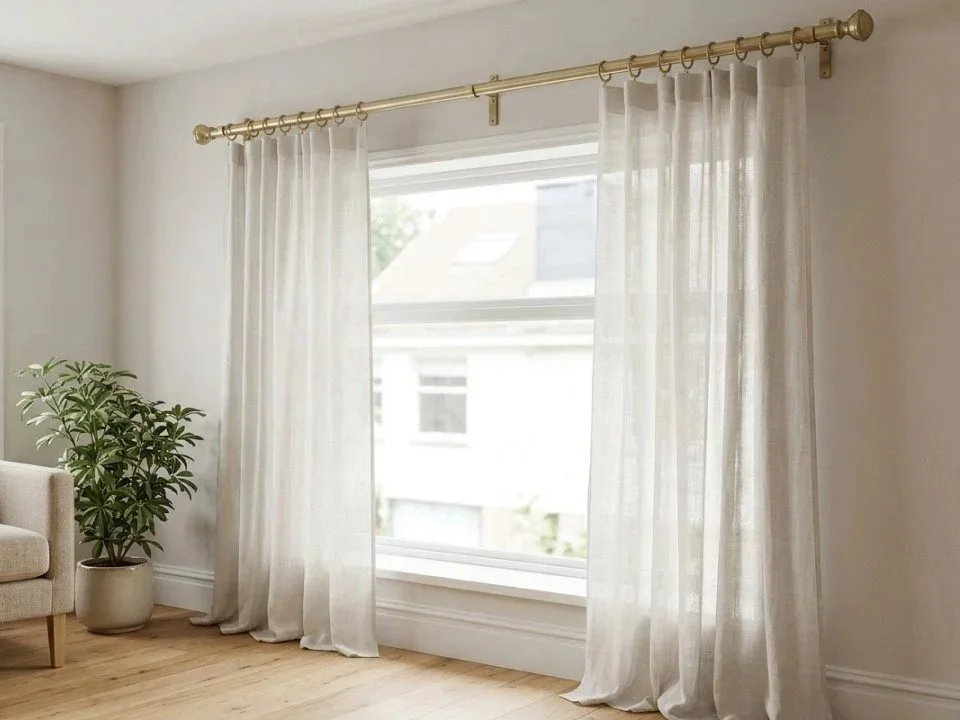
Wooden poles can work well in traditional or rustic interiors, while metal poles often suit modern spaces. If you want something simple that blends into the background, choose a finish that matches your existing fixtures. For a more decorative look, finials at either end of the pole can add a finishing touch.
The type of curtains you have also matters. Lightweight curtains generally need less support than thick, lined or thermal curtains. Check the pole's weight capacity and make sure the brackets and fixings are suitable for the curtains you plan to hang.
You should also consider how the curtains will open and close. Some poles use rings, while others have eyelets built into the curtains. Make sure the pole is compatible with your chosen curtain style and that there is enough room for the curtains to move freely.
How to Measure Pole Length and Position
Accurate measurements help your curtains hang properly and prevent the window from looking cramped. Before buying a pole or marking the wall, measure the width of your window, including the frame if appropriate.
As a general guide, the pole should extend beyond both sides of the window so the curtains can be pulled back without covering too much of the glass. An extension of around 15–20 cm on each side is a useful starting point, although wider windows or thicker curtains may need more space.
Next, decide on the curtain pole height. A pole fitted above the window frame can make the window appear taller and give the room a more spacious feel. A common starting point is around 10–15 cm above the frame, but this can vary depending on the ceiling height, curtain length and the space available.
If you want to create the impression of higher ceilings, you can position the pole closer to the ceiling, provided there is enough clearance for the curtains and brackets. Just remember to check the curtain drop before drilling. Curtains that are too short can leave an awkward gap, while curtains that are too long may drag on the floor if that is not the intended look.
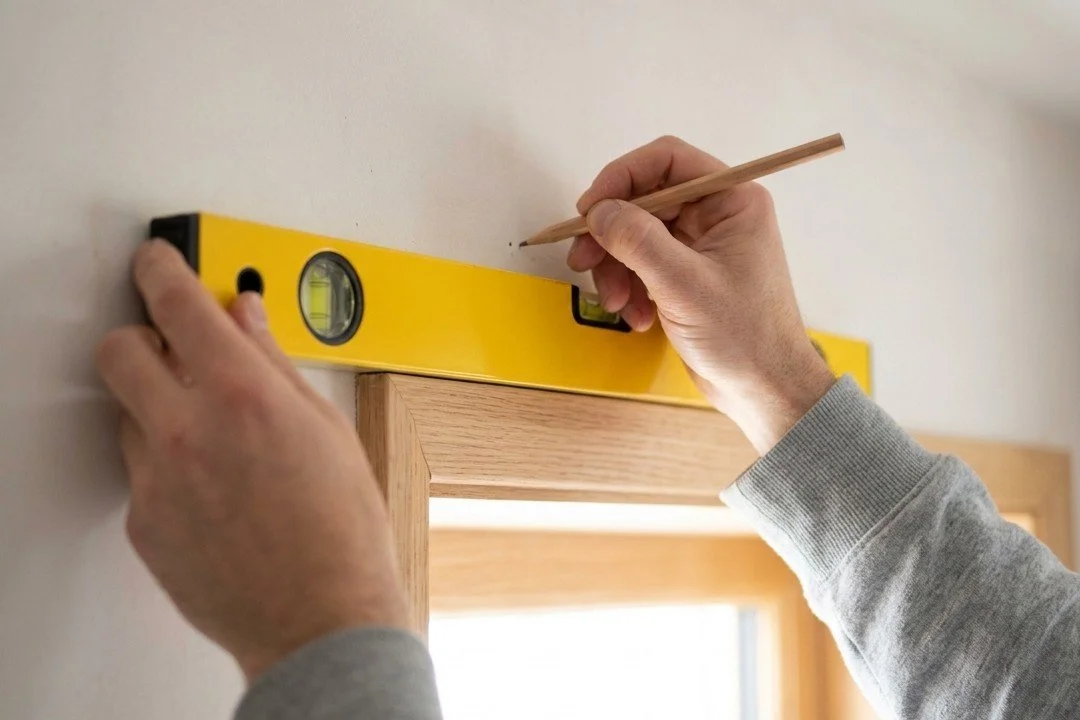
Once you have chosen the position, mark the intended pole length and height with a pencil. Use a tape measure to check both sides and a spirit level to make sure the pole will sit straight.
Where to Place the Brackets
Curtain pole brackets hold the pole in place, so their position has a direct effect on how securely it hangs. Most standard installations use one bracket near each end, but longer poles or heavier curtains may need an additional support in the middle.
Check the manufacturer's instructions for the recommended bracket spacing and maximum unsupported pole length. Avoid placing brackets so far apart that the pole bends under the weight of the curtains.
When marking the bracket positions, make sure they are level with each other and allow enough space for the curtain rings or eyelets to move without catching on the finials. If you are using a central support bracket, check that it will not obstruct the curtains when they are drawn.
It is also important to consider the distance between the pole and the wall. Curtains need enough room to hang without pressing against window handles, radiators or other obstacles. Extendable brackets can help when you need extra clearance.
Before drilling, check what is behind the wall at each fixing point. A suitable wall detector can help identify hidden pipes, electrical cables and supporting studs. Do not drill until you are confident that the positions are safe.
Choosing Fixings Above a Window
The right curtain pole fixings depend on the material you are attaching them to. A fixing that works well in solid brick may not be suitable for plasterboard, so identify the wall construction before choosing your screws and plugs.
Masonry Walls
Brick and concrete walls can provide a strong base for curtain pole brackets when the correct fixings are used. You will usually need a drill with a suitable masonry bit, along with wall plugs and screws that match the wall and bracket.
Check the fixing manufacturer's instructions for the correct drill bit size and hole depth. Drill carefully at the marked points, keeping the holes straight, and insert the plugs as directed before securing the brackets.
If possible, avoid drilling into mortar joints, as the brick itself will generally provide a more reliable fixing point. However, damaged or crumbling brickwork may not hold securely, so check the condition of the wall before starting.
For heavy curtains, make sure the fixings are rated for the load and suitable for the type of masonry. Do not assume that longer screws will automatically make an unsuitable fixing stronger.
Plasterboard Walls
Fitting a curtain pole on plasterboard requires a little more care, particularly if you are hanging thick or lined curtains. Plasterboard alone may not provide enough support for the load, and the brackets can loosen over time if the wrong fixings are used.
Where possible, locate the timber or metal studs behind the plasterboard and position the brackets so they can be secured to the supporting framework. A stud detector can help you find suitable fixing points.
If the brackets cannot line up with the studs, specialist plasterboard fixings may be an option for lighter curtains, provided they are suitable for the board thickness and expected load. Always follow the manufacturer's instructions and check the load rating.
For heavy curtains or a wide window, it is worth getting professional advice if you cannot find a secure fixing point. A properly supported pole is less likely to pull away from the wall when the curtains are opened and closed.
Lintels and Uncertain Surfaces
The area directly above a window can be more complicated than it looks. Some windows have a concrete, steel or timber lintel above the frame, and drilling into these materials may require different tools or fixing methods.
A concrete lintel can be difficult to drill, while a steel lintel may prevent a standard drill bit from making progress. Do not keep drilling if you encounter unexpected resistance, and never assume that a stronger drill will solve the problem safely.
If you suspect a steel lintel, check the construction details or seek advice before choosing another fixing position. Drilling into steel without the correct equipment and preparation can damage tools and create unnecessary risks.
Older buildings can also have uneven surfaces, hidden services or weakened plaster around the window. If you cannot identify the wall material or are unsure which curtain pole fixings will work, a professional can assess the surface and recommend a suitable installation method.
Fitting and Aligning the Curtain Pole
Once you have chosen the pole, checked the measurements and selected the right fixings, you can start fitting the brackets.
First, gather your tools. You will generally need a tape measure, pencil, spirit level, drill, suitable drill bits, screwdriver and the fixings recommended for your wall. Safety glasses are also useful when drilling.
Hold the first bracket against the wall and mark the fixing holes. Repeat on the other side, checking the measurements and using a spirit level to ensure both brackets will sit at the same height. If you need a central bracket, mark that position as well.
Before drilling, check the marked points for hidden pipes and cables. Once you are satisfied that the positions are safe, drill the holes using the correct bit for your wall material. Insert the plugs or anchors where required, then screw the brackets into place.
Give each bracket a gentle check to make sure it is firmly attached and does not move. If a fixing feels loose, do not try to solve the problem by simply tightening the screw further. Check that you have used the right fixing and that the wall material is sound.
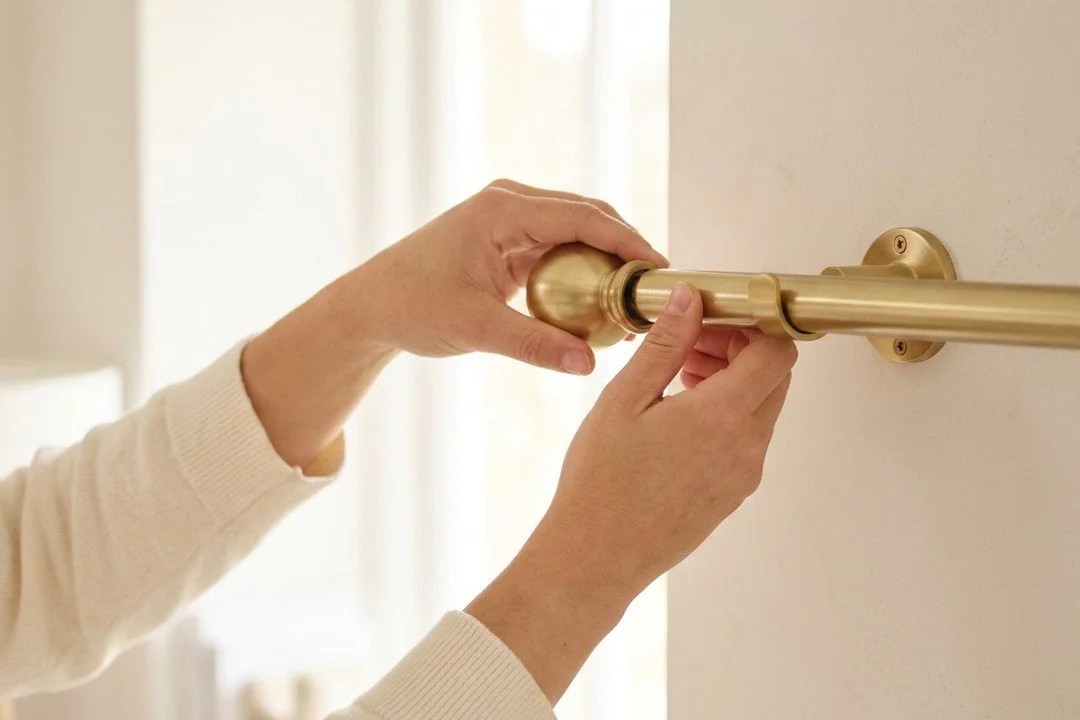
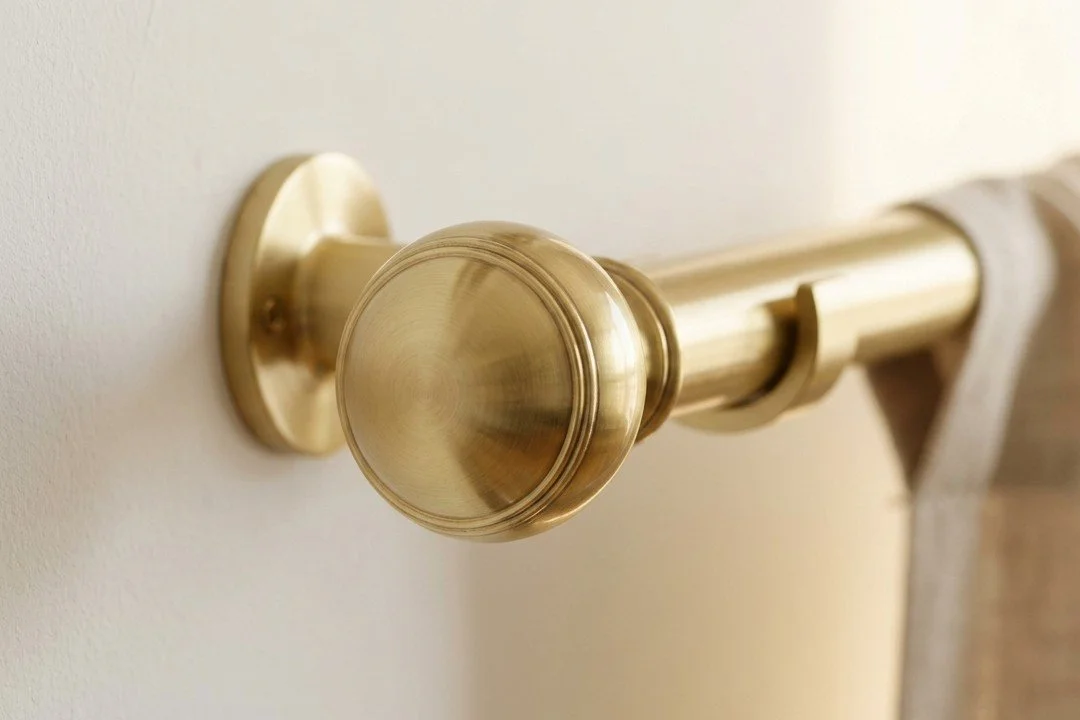
Next, place the curtain pole onto the brackets according to the manufacturer's instructions. Depending on the design, you may need to secure the pole with small locking screws. Fit the finials and add the curtain rings if they are not already in place.
Before hanging the curtains, step back and check that the pole is level and centred over the window. Make sure it sits securely in every bracket and that nothing catches when the curtains are moved along the pole.
Finally, hang the curtains and open and close them gently to test the installation. If the pole bends, shifts or makes the brackets move, remove the curtains and check the support before using it again.

When to Hire a Curtain Fitting Professional
Fitting a curtain pole can be a manageable DIY job, but there are situations where calling a professional makes more sense. If you have heavy curtains, a particularly wide window or a wall that is difficult to drill into, an experienced fitter can help you avoid mistakes.
Professional help is especially useful when the wall material is unclear, the window has a steel lintel or the plasterboard does not provide suitable fixing points. A fitter can assess the surface, choose compatible fixings and position the brackets so the pole can support the curtains properly.
It can also be worth hiring someone if you need several poles installed across different rooms or want a precise finish around bay windows, unusually shaped windows or awkward corners.
A correctly fitted curtain pole should look straight, support the curtains without bending and stay securely in place during everyday use. With careful measuring and the right fixings, you can achieve a neat finish that complements your room. If you would rather leave the job to someone with the right tools and experience, a professional can take care of the installation for you.