Why Won’t My Door Close Properly? Common Fixes
You push the door shut and it needs a bit more force than usual. A week later it scrapes. Then one day it simply refuses to click into place and you are left standing there wondering what changed.
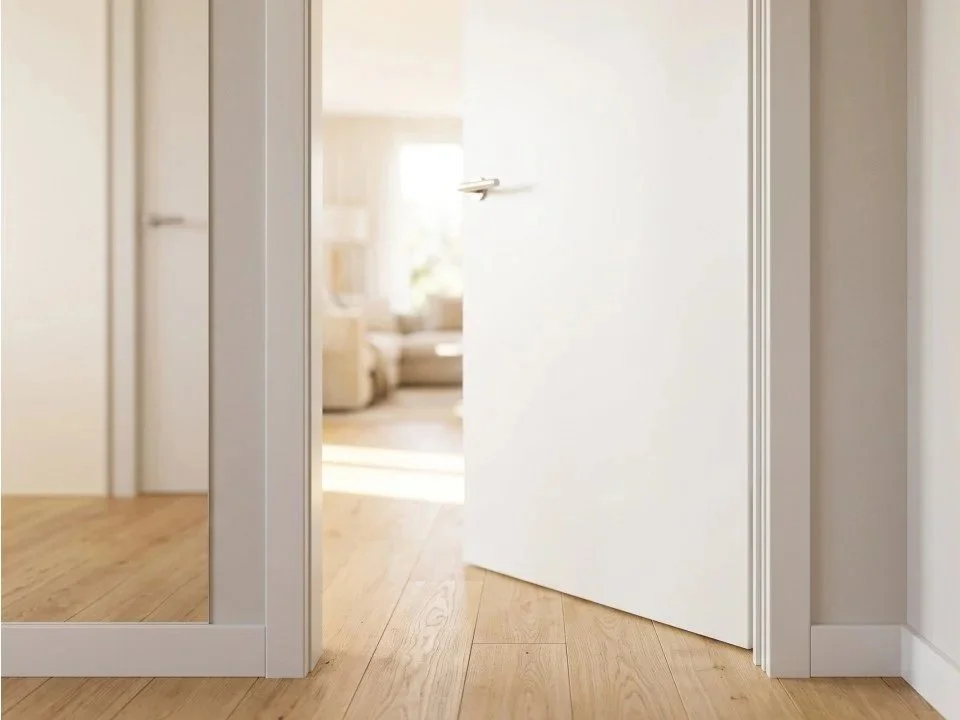
If your door will not close properly, there is almost always a practical reason. It might be a door rubbing frame, a door misaligned, or an internal door not closing because something has shifted slightly over time. Most of the time, it is not dramatic. It is just gradual wear, movement, or moisture doing its thing.
Let us break it down properly.
Low Water Pressure in Your Home? What Causes it and How to Fix It

Why Doors Stop Closing: The Most Common Causes
Doors do not randomly decide to stop working. Something has moved.
The most common causes tend to be:
Loose hinges pulling the door out of line
A door misaligned after months or years of use
Poor door latch alignment
The door rubbing frame along one edge
Seasonal swelling
Minor structural movement in the house
A heavy door can slowly drop by a few millimetres. That tiny drop is often enough for the door will not latch issue to begin. It does not take much.
People often assume the door itself is damaged, but more often than not, it is just slightly out of position.
Quick Checks: Hinges, Screws and the Latch Plate
Start simple.
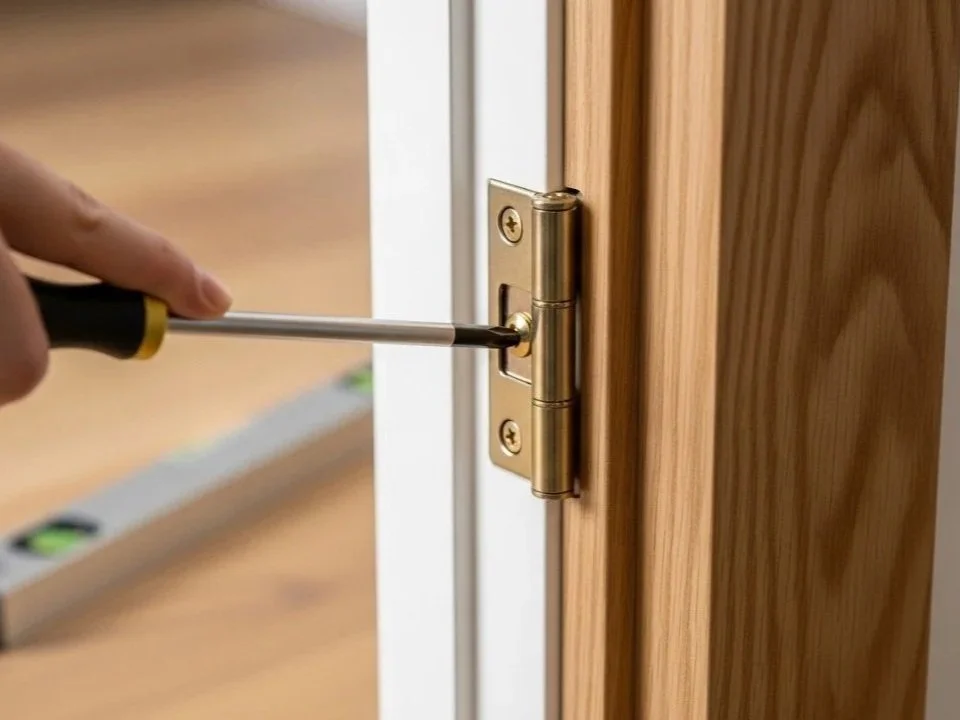
Open the door and look closely at the hinges. Try gently lifting the door by the handle. If it moves up and down even slightly, the hinges may be loose. Tightening the screws might immediately improve things.
If a screw will not tighten properly, it may not be gripping the wood anymore. Replacing it with a slightly longer screw can often solve that.
Now check the latch plate on the frame. If the door will not latch, look for scratch marks around the metal plate. Those little marks tell you whether the latch is hitting too high or too low. That is a classic door latch alignment problem.
Sometimes a small hinge adjustment is all that is needed. Other times, shifting the latch plate a few millimetres makes the difference. When people search for how to fix a sticking door, this is usually where the solution is hiding.
Door Rubbing the Frame: How to Find the Contact Point
If you can hear or feel a scrape, you are probably dealing with a door rubbing frame issue.
Close the door slowly. Do not force it. Pay attention to where it starts to resist. It might be:
The top corner near the handle
The bottom edge
The side near the latch
Look for scuffed paint or slightly shiny areas on the edge of the door. Those marks are useful. They show you exactly where the pressure is happening.
Often, tightening the hinges corrects the position. If the rubbing is minor, very careful sanding can help. Remove a small amount at a time. It is easy to take off more wood. It is not easy to put it back.
Humidity and Swelling: Why Doors Change Shape
Timber doors react to moisture more than many people expect.
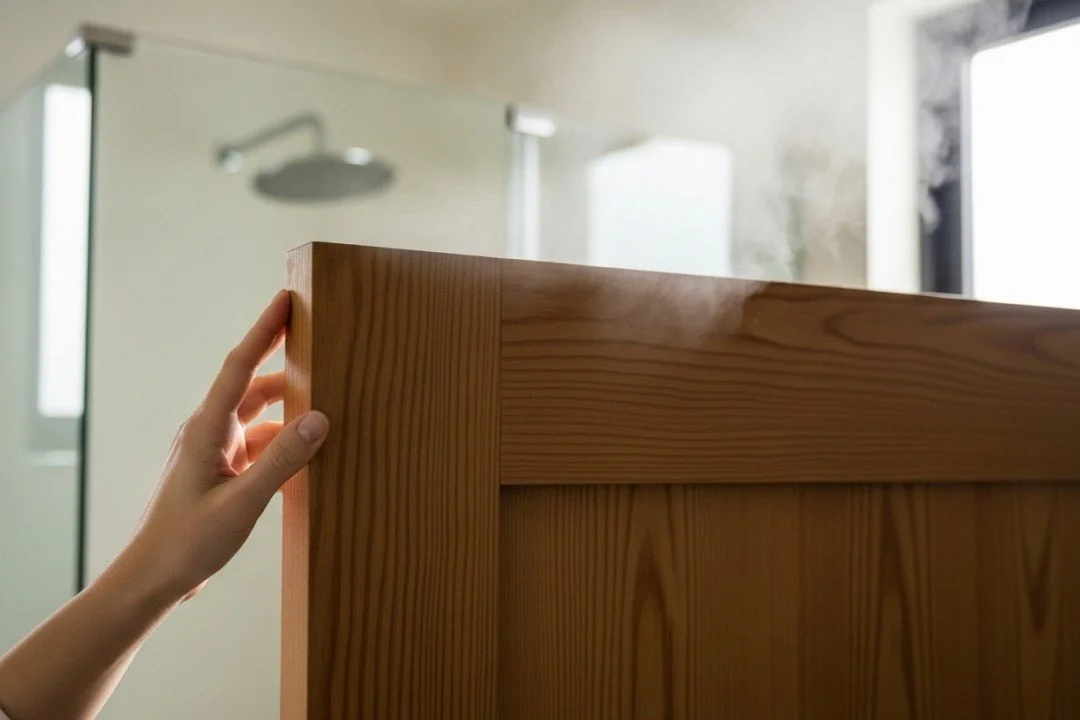
During damp weather, especially in kitchens and bathrooms, a swollen door humidity problem can appear. Wood absorbs moisture from the air and expands slightly. That expansion might only be a few millimetres, but it is enough for an internal door not closing properly.
You might notice:
The door feels tight all around
It sticks more on rainy days
It improves slightly when the weather is dry
Better ventilation can help. Keeping moisture levels down makes a difference. If swelling continues, careful trimming may be needed, but always seal the exposed wood afterwards to prevent it happening again.
uPVC Doors: Basic Adjustment Points
If you have a modern door, the issue may involve uPVC door adjustment rather than wood swelling.
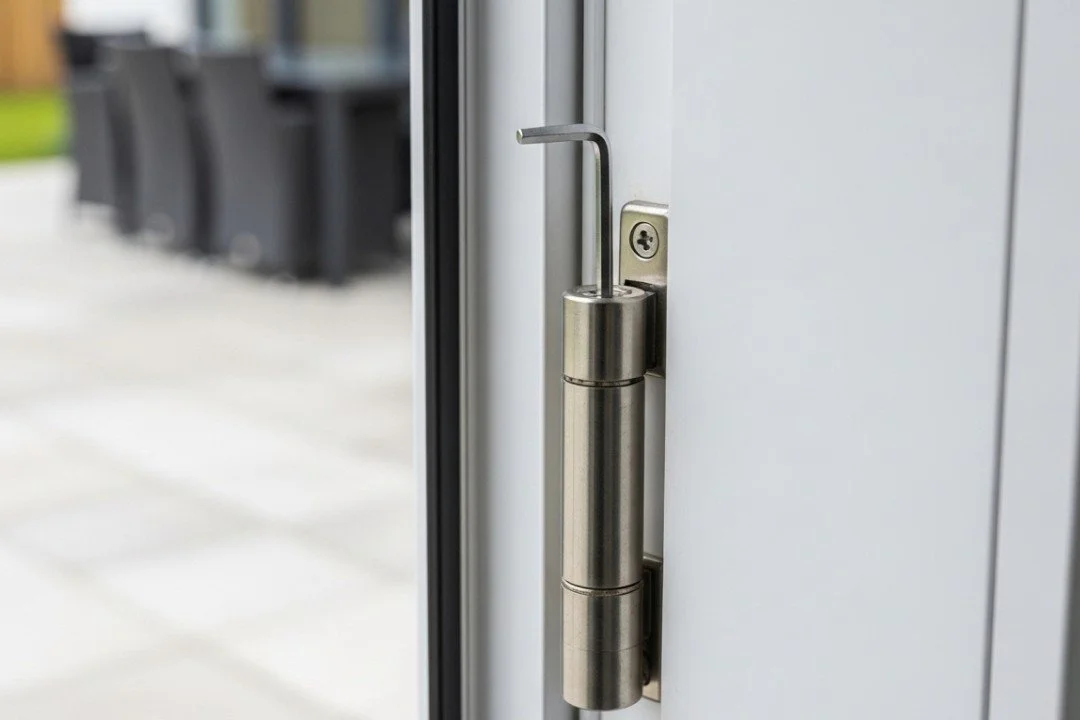
Most uPVC doors are designed to be adjusted. The hinges often allow small vertical and horizontal movements. With the correct Allen key, you can:
Raise or lower the door slightly
Move it left or right
Adjust how tightly it seals
If your uPVC door will not close properly, small adjustments are usually enough. The key word is small. Make a slight change, test it, then adjust again if needed.
When the Frame Is the Problem (Warping & Settlement)
Sometimes the door is not the main issue.
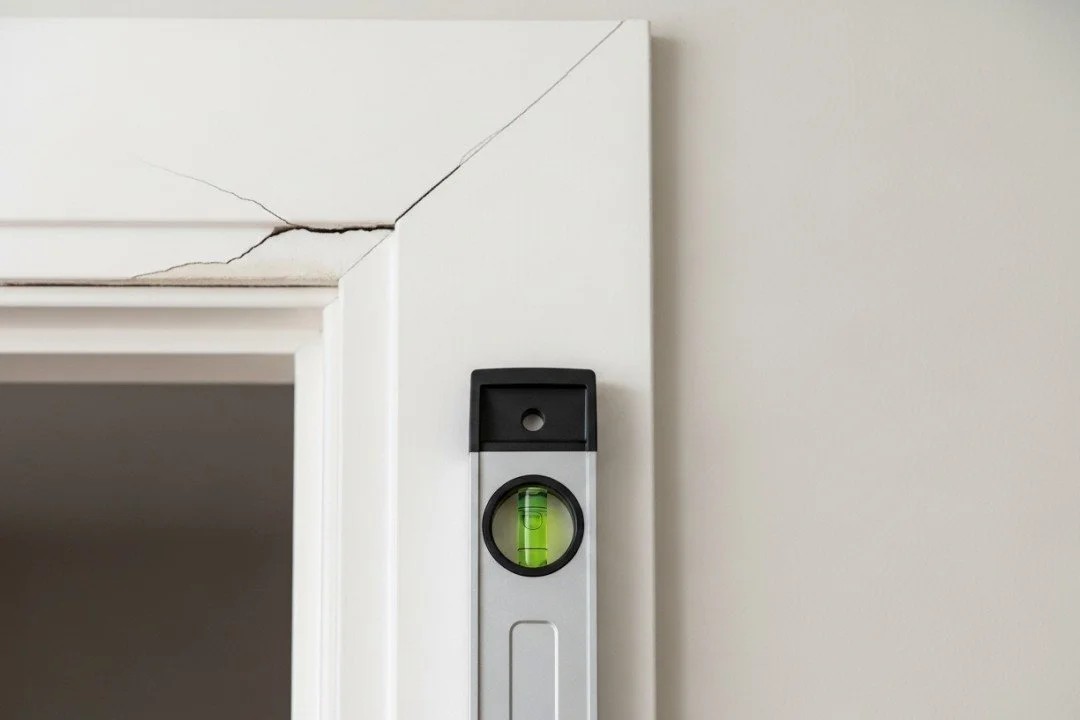
Houses settle. Walls shift slightly over time. When that happens, the frame itself can move just enough to cause a door misaligned situation.
You might notice uneven gaps around the door or small cracks near the frame. If several doors in the property are sticking, structural movement could be involved.
At that point, hinge tweaks alone may not fully fix the problem.
When to Call a Carpenter or Locksmith
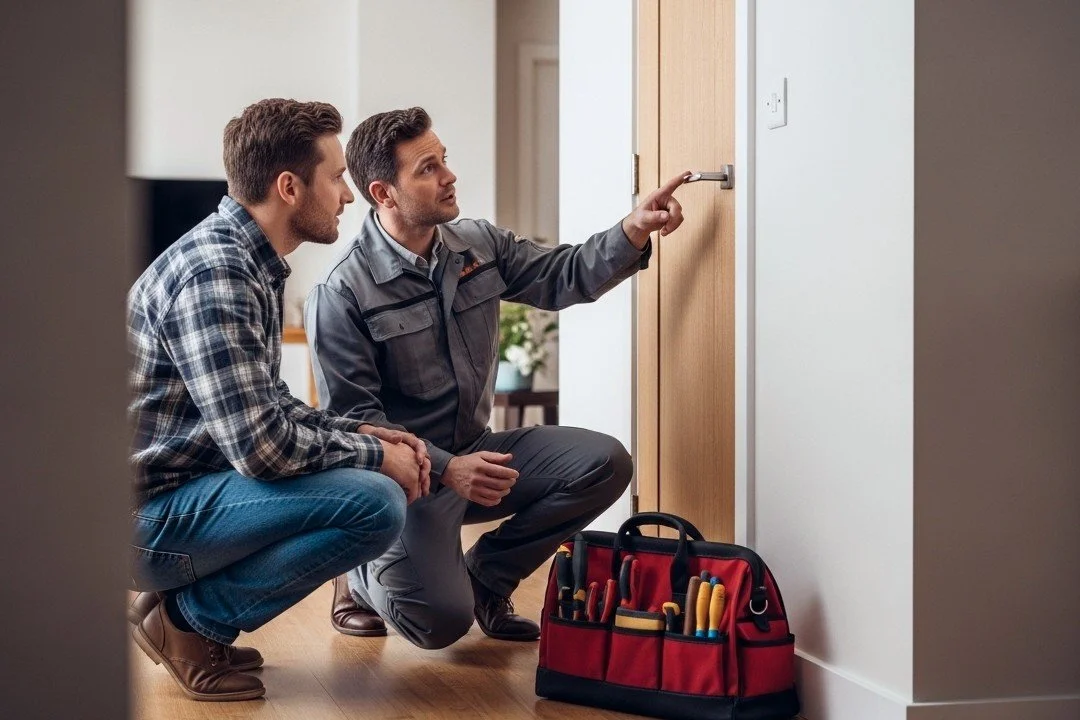
There is a point where it makes sense to get professional help.
If the door will not latch after repeated adjustments, or if the door is clearly warped, it may need experienced attention. A carpenter can assess alignment issues. A locksmith can check whether the locking mechanism is contributing to the problem.
Most sticking doors are simple to resolve. Occasionally, they are not.
Final Thoughts
A door rubbing frame or a door will not close properly situation is usually irritating rather than serious. In many cases, it comes down to a few loose screws, minor hinge adjustment, or a small shift in alignment.
Take a slow, methodical approach. Check the obvious things first. Look for clues rather than guessing.
Very often, the fix is far less dramatic than it feels in the moment.